Showing posts with label health. Show all posts

Thursday, December 20, 2018

A Good Start to the DASH Diet

Again, almost a year without posting! I've been treading water, same old same old. But have just embarked on a major health push... lose weight, lower my blood pressure... again!

I've started the DASH diet, very mainstream but highly touted for lowering blood pressure, losing weight, and lowering the risk for most non-communicable diseases, including the biggies in aging: diabetes, heart disease, and cancer. 

I just began yesterday, and as of this morning my weight was down 1-1/2 pounds, and my blood pressure down 10 points (a total of systolic+diastolic change). A really encouraging start!

This Morning's Breakfast
I felt quite satisfied with the food, both quantity and quality. In fact, I was (unbelievably) unable to finish all the selections by bedtime! 

DASH reminds me of old-time Weight Watchers selection plan, but with more food! As far as I can tell, it is designed to (1) lower salt intake, (2) increase intake of vegetables and fruit, (3) control intake of fats, especially saturated fats, (4) control calorie intake to allow weight loss,  (5) control macronutrient (carbohydrate, protein, fat) proportions, and (6) ensure adequate intake of many micronutrients (vitamins and minerals, in particular). 

Yesterday, I had quThiite a lot of food. Breakfast was a classic: an egg fried in butter, with whole wheat toast and a sliced orange. Washed down with two mugs of coffee with almond milk. 

A quick lunch after returning from a mall expedition: a tin of sardines in water, alongside a plate of cut-up raw veggies topped with a bit of olive oil and balsamic vinegar, and whole wheat bread chunks to sop up the oil and vinegar. And an apple.

An afternoon snack; toast with peanut butter and a banana.

Finally dinner: A big skillet of broccoli, carrot, mushroom, red bell pepper and onion, with an ounce of chicken breast and a cup of cooked barley added in, plus a teaspoon of virgin olive oil. Then for dessert, a cup of low-fat yogurt sweetened just a little with stevia and red and green seedless grapes, a few chopped raw nuts for crunch. I sprinkled just a little light salt (sodium and potassium chloride blend) over this as it seemed a little bland.

This morning, my breakfast (pictured above) was again an egg, but this time fried in olive oil with chopped onion and green and red bell pepper, topping a warmed corn tortilla, and everything sprinkled with chopped cilantro. I added a sliced orange, and again had a couple cups of coffee/decaf with nonfat milk. Very tasty and filling.

Like I said, a lot of food, but all pretty healthy by mainstream standards. I prepared a little tracking sheet so I can check off the "boxes" for the food selections as I go, as well as write down a diary of my food and exercise for the day. 

I am reading The DASH Diet Action Plan, by Marla Heller, MS RD. The basics for the DASH (Dietary Approches to Stop Hypertension) are widely available on the internet, including a lot of recipes, but I like having a little book to look at. Heller's seem to be reliable and usable, with all the needed info, sample meal plans, and a lot of advice and tips. 

I mentioned "mainstream standards" above  for good reason. Before buying this book I read all the reviews for it on Amazon. Many people reported losing substantial weight and lowering their blood pressure. But there were a few who took Heller to task as "outdated" and/or "unscientific" for not following two of the dominant alternative diet paradigms of the day: paleo/low carb, or alternatively WFPB (whole food plant based), a high carb and very low fat diet. I have considerable experience with both of these, and for me, they don't work well. 

I have always felt better on a lower carbohydrate eating plan, but going too low always resulted in low energy and only a little initial weight loss, even after the initial weeks. 

I really, really wanted WFPB to work for me, and I've done it for months at a time in the past, but the older I get the worse I feel on it. It does lower blood pressure and result in weight loss. When I saw my doctor in October and discovered my blood pressure was quite high again, which I confirmed at home with my own meter, the first thing I tried was WFPB. I lost a few pounds and my BP readings started to come down. But... I didn't feel well. I started experiencing the mild depression and anxiety I"m prone to, along with mild intermittent nausea. I developed symptoms of what was probably fungus or yeast infection. My arthritis flared up, especially in my feet, knees and hands, so I felt achy most of the time, more so after a good walk. Cutting out the excessive carbs and using more protein and fat partially resolved most of those symptoms, but the BP readings climbed - not to initial levels, but higher - as did my weight. I tried upping my magnesium intake with easily-absorbed forms of magnesium, but did not see much change.

So I've gone back to a more "balanced" diet plan, the DASH, which controls carbs and sugars, keeps meat/fish/poultry and fat  relatively low, and makes sure you get a lot of micronutrients from abundant intake of fruits and vegetables, rather than relying on pills and supplements. It is the plan most endorsed by the medical mainstream, and seems to get good results with a lot of people.

So I'll give this a trial for at least a month... three would be better. It seems to be a kind of eating pattern you could adopt and make into a habit, just as I got used to the old Weight Watchers selection plan years ago (and lost a lot of weight, too, although the calorie level was too low, resulting in hunger at night.) The DASH is similar enough to that old program, including portion sizes, that I'm finding it pretty easy to slip into so far. And it's more in line with my calorie needs - I set it for 1600 calories, a lot more than the 1200 allowed by old WW. 

And I'm feeling well this morning. In spite of probably well over two hours of walking yesterday, the arthritis pain didn't show up. I slept fairly well and my mood is pretty good - no anxiety, depression, or nausea. And both my weight and blood pressure are down a bit. A good start!




Wednesday, January 3, 2018

New Year's Resolutions and a Furry Family... Again

It's been over two years since my last post! I miss blogging! And many things have changed. A little over a month after I last posted, my little dachshund Petey got very sick, and right after the dawn of 2016 we had to say our forever goodbyes. I was beyond devastated, and then got rather sick myself with some mild-to-severe anxiety issues. Happily, I've since gotten past all that.

The biggest problem was loneliness without my best little buddy. My sympathetic nervous system just went on high alert for whatever reason, and I had nausea, trouble eating, and soaring blood pressure. Turns out that when the anxiety is controlled, so is the BP, so no austere, salt-free diet required. But it took quite a few doctor visits and prescriptions to get this all sorted.

I "somehow" adopted a high-energy older puppy from the local shelter at the end of February 2016. Her name is Daphne and she has been more delight than trial, though both are present. Then in August, Daphne found two tiny, black abandoned kittens in the ivy, and we adopted them, along with a an orange young feral male cat who had been hanging around and obviously looking for a family. Whew! The kittens are over a year  old now. Daphne and the larger of the kittens are well-matched in energy level, despite the difference in size, and it's been nice for Daf to have someone to romp and tumble with. Daf is a 45-pound Boxer-Pit Bull mix, and their seemingly rough play worried me at first, but they are devoted to one another and no harm is ever done.

Quality of life is something I am trying to focus on at this point. Between the anxiety and low-grade depression, and the increased work and energy needed to take care of my new brood, a lot of things have slipped through the proverbial cracks. Also, I realized that I need to form stronger bonds with other humans in my life. I had such a happy, comfortable life at home with my little Petey that I didn't feel the need for more than the casual friendships and acquaintances I had in my life. But when Petey was suddenly gone, I felt so bereft, and it was hard to fill the void. Putting most or all your emotional eggs in one basket, I've found, isn't such a great idea. This probably applies as much to husband-wife relationships, or any other close human tie, as it does to the relationship with a pet.

So, the things I want to focus on in the coming months are:
  • Get my home organized again and take care of any deferred maintenance issues.
  • Spend more time in the garden, culling out overgrowth and adding some nice plantings.
  • Spend more time with friends and family, and make some new friends.
  • Work on bringing more balance into my life.


Monday, April 6, 2015

Are Homemade Cleaners Worth Your While?

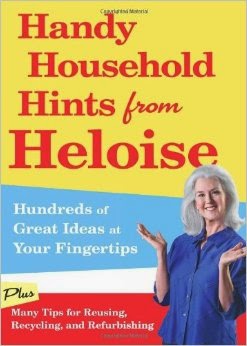
Back in the 1960’s, housewives read the Heloise column in the morning paper and learned to use hairspray to remove ballpoint pen ink stains from their husband’s shirts, and to use crumpled newspaper with a vinegar-water solution to clean windows. Did you know that, 50 years later, Heloise’s daughter still publishes magazine and newspaper columns, as well as maintaining a Heloise website? There are several books listed on Amazon, too. The latest is Handy Household Hints from Heloise: Hundreds of Great Ideas at Your Fingertips.

I learned a lot from Heloise - about easier ways to clean my home, how to do little things to save pennies here and there (and we know how these really do add up), doing laundry, recycling. She was out at the front of the movement that continues to this day... using nontoxic, everyday products like vinegar and baking soda to do much of your cleaning.

Today’s Sources of Cleaner Recipes

Today it’s not just Heloise. Amazon.com and the blogosphere are full of books and websites about natural, homemade cleaner recipes. Here are a few of the websites:
  • Rodale's recipes for 8 green cleaners that work. These include an all-purpose spray cleaner, a tile cleaner, an oven cleaner, window cleaner, lemon oil dusting liquid, air freshener, a gentle scouring cleaner, and laundry powder.
  • Apartment Therapy one-ups Rodale by providing 25 green cleaning recipes. The author claims that cleaners for almost every purpose can be made using various combinations of baking soda, white vinegar, hydrogen peroxide, borax, essential oils (such as tea tree oil, lavender oil, and eucalyptus oil), castile soap (such as Dr. Bronnerss), herbs and citrus peels, olive or other vegetable oil, and water.
  • HGTV’s article discusses ingredients used in green cleaning formulas and provides several recipes. Ingredients include white vinegar, baking soda, lemon, and rubbing alcohol. They also suggest adding a little ammonia to make strong cleaning solutions. Ammonia is often left out of “green” recipes because it is a strong alkali and therefore hazardous when undiluted. But it also provides strong grease-cutting power that may be needed at times, and is safe to use when handled properly (wear eye protection when mixing, for example, and NEVER combine ammonia with bleach (unless you want to damage your lungs with chlorine gas). 
  • Good Housekeeping Provides 9 recipes for homemade cleaners. These include the old “green” standbys of vinegar and baking soda, plus some non-natural ingredients such as ammonia, toothpaste, and dishwasher detergent. 

Is It Worth Your While to Make Your Own Cleaning Products?

There are good reasons for both making your own cleaners and for buying commercial products. So whether it's worth your while to make your own depends. It’s really a trade-off between convenience and effectiveness versus cost, environmental considerations and health. And how these balance out for you will probably vary from product to product.

Convenience

There’s no question that it’s faster and easier to pull a bottle of cleaner off the supermarket shelf and bring it home. When you make a batch of cleaner, you usually need to have multiple ingredients on hand, as well as containers to mix, store, and dispense your cleaner. Many homemade cleaner recipes just call for a few things you might already have on hand, such as baking soda or vinegar. For others, however, you may have to hunt around for things like lemon grass oil or other essential oils, or you may even have to order them online.

Effectiveness

Any of us who have purchased “green” cleaners have noticed that many don’t work as well as the “heavy duty” cleaners we used to buy. The same thing will be true for many homemade cleaners. That said, for many cleaning jobs you don’t need super powers. You can usually clean windows and mirror with just water and a towel. Adding a little something to the water is usually all you ever need. The same is true for kitchen counter sprays. Mothers with babies and young children may need a super-powerful laundry detergent. But empty-nesters like us may just need a basic detergent plus a bar of Fels Naptha soap for treating spots.

Cost

Most homemade cleaners will be cheaper than purchased cleaning products. There’s no way you’re going to find a bottle of window cleaner for sale that costs less than a cup or two of water, a little bit of vinegar, a drop of dish detergent, and a $1 spray bottle from the dollar store. Homemade may not always be cheaper, however, especially for some of the recipes that use more unusual (and costly) ingredients such as essential oils. There may also be commercial products sold at dollar stores that work as well, or almost as well, as the higher-priced brand name products sold at supermarkets. Some of these dollar store products may actually be cheaper than a homemade cleaner, especially when you include the cost of a container for storage or application.

Environmental and Health Concerns

Commercial cleaning products are made with a large number of chemicals, many of which are not good for the environment, your health, nor the health of your grandchildren and pets. And many or most are not specifically listed on the label.

The truth is, many of these may be causing allergies, sensitivities, and possibly even long term damage to our health we’re not aware of. And things that may not cause you a problem may be harmful to children or pets. For example, many people like to use pine oil cleaners for the fresh “natural” scent they leave behind. But vets recommend against using them around dogs, because they can cause liver damage. If they cause liver damage to dogs, what are they doing to OUR livers?

Homemade cleaning product recipes are now often touted as being “green.” Their ingredients are mostly non-toxic. Even potentially toxic ingredients like bleach and ammonia are quickly neutralized in the environment, when released in small amounts, and don’t cause any lasting harm. Making cleaning products at home from basic ingredients means you can know what is in your cleaner. There will be few, if any, undisclosed chemicals that you don’t understand. For people with allergies, liver damage, or other health problems, this factor may outweigh all the others.

Another environmental consideration is packaging. When you buy a bottle of liquid detergent, for example, its heavy plastic bottle goes into the recycling (hopefully) or the trash. You may feel OK about that if you recycle, but don't forget the additional environmental cost of manufacturing both the product and the packaging. Manufacturing in the US is far cleaner than it used to be, but it still requires a lot of energy, and inevitably results in some level of air and wastewater emissions.

This will also be true, remember, for the raw ingredients you use to make your homemade products. That vinegar and baking soda were manufactured, too, and someone had to produce the plastic or glass jug the vinegar came in, and the printed cardboard baking soda box.

Still, the biggest ingredient in many cleaners is water, and for many homemade cleaners you add only small amounts of other ingredients. Too, you’ll may use an existing container you’ve recycled for use in storing and applying your cleaner, and you’ll certainly reuse it when you need to make another batch. So from a packaging standpoint, homemade will usually come out ahead of purchased.

It’s Confusing... What Should I Do?

I know, it’s confusing for me, too.

Personally, I buy some cleaning products, and others I make. I really can’t see going to the trouble of making up one of those laundry soap recipes when a mid-sized bottle of laundry detergent lasts me for months. I’ve learned that we mostly use way too much detergent, and have cut way back on both that and softener.

In the bathroom, I prefer to use a scouring cleanser (like Comet) and commercial toilet cleaner for heavy cleaning, but I use homemade cleaning solutions for wiping down tile, tub, sinks and other surfaces. And of course vinegar, water, and crumbled newspaper are better than Windex for windows and mirrors.

I’d say just weigh your situation and needs, and the factors listed above, and make the best decision you can. But don’t make spreadsheets or spend hours at it. Use your knowledge and common sense. Remember that as an empty-nester, your need for cleaning products is probably a lot lower than when you had to clean up after a family. On the other hand, because things don’t usually get as dirty, you will likely have less need for really strong cleaners. Above all, your own priorities, such as health, finances, and available time, should be the deciding factors.


Wednesday, March 18, 2015

Alcohol May Be More of a Problem for Seniors

I'm not much of a drinker, although I occasionally enjoy a nice glass of wine with dinner, a cold craft beer, or an Irish coffee as dessert. Alcohol is expensive, so I have put it in that "luxury" category of purchases that I don't make often because they just aren't high on my priority list. I do know retired folks who seem to spend an awful lot of their retirement cash on booze, and to me that seems like a waste.

But it looks like there may be another reason to go easy on the alcohol. Now, I often listen to the Wall Street Journal Report on the radio in the morning... it's a morning news summary I find very interesting. And not long ago I was surprised to hear them mention a study showing that even a large glass of wine increased the risk of stroke by a third in older folks. With a little Googling I found an article from the Telegraph that gave more information.

This appears to have been a substantial (over 5,500 sets of twins), long term (43 years) study that was published in the medical journal Stroke. Big studies like this, especially those that use genetically identical twins, tend to be more reliable than all the very small studies we read about most often. Still, until a specific causal relationship and mechanism has been established by further research, results from associations discovered in even big studies like this should be considered tentative.

This latest study focused on subjects in their 50's and 60's who regularly consumed two units (drink equivalents) of an alcoholic beverage per day, for example a large glass of wine or a pint of beer. Their stroke risk averaged 34% higher than those who did not drink. The fact that the effect was present even in these identical twins means it was not related to genetic but to lifestyle issues. In this case, probably the alcohol consumption.

I know I've seen other studies showing a benefit from modest alcohol consumption, and this article mentions one in which middle aged male teetotalers had a higher risk of heart failure than those who regularly drank small amounts of alcohol. The conclusion here is that while a little alcohol is probably not harmful and may even have some benefit, larger quantities consumed regularly, even to the tune of two drinks a day, can impair your health. In this case, raise your risk of stroke significantly.

I guess I'll continue to be mostly abstemious. It appears to be healthier and it's definitely more frugal, too.


Monday, March 16, 2015

To Nap or Not to Nap?

Feeling well is important to living well. And I've read lately that the quantity and quality of your sleep is very important to your health and feeling of well being. But... my sleep pattern is not at all regular. I've found myself taking short naps lately, too, sometimes falling asleep while I'm lying down reading a book after lunch. I've heard that people don't need as much sleep when they get older, but is that true? Are naps messing up my nighttime sleep even more? Do I need to worry that my sleep habits seem to have changed as I've gotten older?

Sunday, March 8, 2015

Vitamin D vs. Diabetes

Yesterday's post, Vitamin D Versus Disease, told how I discovered the positive effects Vitamin D seemed to have on my immune system. I just hardly ever get sick these days. But there is a new study out suggesting that Vitamin D deficiency may increase your risk of developing type II diabetes, and that this effect was present even in non-obese people. You can read about these findings here.

Obesity is often blamed for causing type II diabetes, although from what I've read it's not clear whether obesity is the cause, or just one of the symptoms of this disease. However, the inverse correlation between blood Vitamin D levels and type II diabetes incidence was studied in both obese and non-obese individuals and found to be present in both groups. This particular study indicates that the association between blood Vitamin D levels and diabetes is actually stronger than that between obesity and diabetes.

Type II diabetes has become a world-wide epidemic, and because it becomes more common with age, it is of particular concerns to us seniors. The effects of diabetes on the body can be devastating: heart and circulatory system disease, kidney disease, blindness, even Alzheimer's disease are all named as effects of diabetes. If something as simple as adding a Vitamin D3 supplement to my diet can help stave off some of these diseases, it would seem to be worth a few dollars a month.

This is an interesting new study, but it's far from the first time I've read about positive effects of Vitamin D supplementation on endocrine function, diabetes, and weight loss. As discussed below, Vitamin D is cheap and there is never going to be a lot of profit from it. It's too bad that in our world, the bulk of research dollars seem to go to studying very expensive pharmaceuticals, so many of which have horrendous side effects, and very little money goes to research of more natural, less harmful, cures.

At any rate, Vitamin D3 supplements are really cheap. The Twinlab Vitamin D dots pictured here can be purchased in a package of 100 from Netrition.com for $4.99. Other brands are even cheaper. I used to pick up a bottle of generic gelcaps at K-Mart for a few dollars. You shouldn't need to pay more than a couple dollars for a month's worth.

As a side note, I've been buying supplements from Netrition for years now, and have found their selection and prices good, and their shipping reasonable ($4.99) and reliable. I'm not getting anything from them from this mention, but as a reader I always like to know which online stores bloggers have had a good experience with. 

Wednesday, July 18, 2012

Living in the Heat... Without Air Conditioning

I really don't like air conditioning, and have never had it in any home I've lived in, except for a time after moving to the east coast when I was living with my daughter. I hated it then. "I want to be warm in the summer, and cool in the winter", I said.

Having lived in my own AC-free zone here in Delaware for five years now, I'd say I've been pretty successful in learning to live with the heat. Now, when I was growing up in Southern California, there was no such thing as air conditioning. We lived at the beach, so there was no need, but even in the hot inland areas, people just... dealt with it. Back then you'd run across the occasional "swamp cooler," but I found the humidity they caused not worth the modest cooling. Years later, working outdoors in a California low desert summer, I discovered that my body was marvelously adaptable to even pretty extreme heat, so long as I took the usual precautions - lots of water, electrolyte replacement, and wetting down occasionally when it got really hot, 105 and above.

Here in Delaware, it's not so much the heat but the humidity that gets to me sometimes, but when the thermometer really soars, up into the high 90s and beyond, the (relative) humidity always falls, and it's not really so bad out of the sun, especially if you have a breeze or a fan. It's 96 as I type this, and the light breeze wafting in from the window feels lovely. I'm not particularly uncomfortable, except for the dripping perspiration. Which is a good thing... people who become well acclimated to heat also sweat... a lot. Those who don't can get very, very sick.

So I'm really doing fine through our 2012 heat waves, without AC. I get up early and do most of my work in the morning. I take my exercise walk around the park, and then walk the dog. I walk to do my shopping early, too. Then, in the afternoon I sit downstairs where it's cooler, and read or do paperwork, with a big fan blowing on me. I sip a big glass of ice water, iced tea, or iced coffee frequently. I don't do much. If I feel hot and sticky before bed, I take a nice, cool shower. In bed, I have another big fan blowing on me. This is how people lived until just a few decades ago, and they were generally healthier than we are. Before electricity, they didn't even have fans, except for the hand-held kind! Unless you are really ill, I think that staying in a controlled-climate cocoon, as so many do nowadays, is probably actually harmful. But that's just my opinion.

What I do know is that eschewing air conditioning saves a LOT of money. I know many people whose electric bills run several hundred to over a thousand dollars a month in the summer! That's not in my budget, for sure. All that fossil fuel use is also bad for our planet.

Bottom line - I've chosen to live an old-fashioned summer, with fans whirring, Adirondack chairs set out in the grass under a tree, and tall, frosted glasses of iced (diet) lemonade. By the way, your body actually burns more calories keeping you cool when it's hot, just as it does keeping you warm when it's cold. I didn't use to know that. So... win, win, win.