Showing posts with label books. Show all posts

Monday, March 30, 2015

Is It Time for Spring Cleaning?

I’ve never been one of those who enjoys cleaning my home and keeping it organized. And yet, I’ve found over the years that I function better and am happier when my living and working environments are neat, tidy, and clean. Now that I am retired, you’d think it would have become simpler to maintain order here at home... but it has not! It’s by no means the proverbial pigsty my mother used to occasionally compare my messy childhood room to, but it’s typically not as organized and company-ready as I’d like. From as far back as I can remember, spring has been the traditional time to do a really thorough housecleaning.

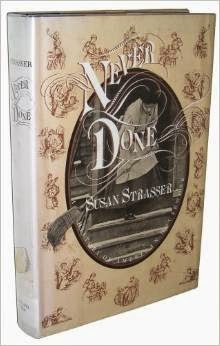
My local newspaper recently featured information from a book about the history of house cleaning, Never Done: a History of American Housework, by Susan Strasser, a local professor emeritus of history. (She has written some books that sound fascinating, by the way, including a history of trash!) Then, as now, where winter weather is cold, people keep their windows tightly shut to conserve warmth. But when coal and wood were used to heat homes, and kerosene and candles were used for lighting, a lot of dirt accumulated during the cold season. It wasn’t just dust - oily soot had to be removed from surfaces, and that was hard work. Spring cleaning was an absolute necessity back then. According to Strasser, women would typically set aside a full week, and work daily, from dawn to dark, on their spring cleaning.

There were no vacuum cleaners back then. No rug shampooers, Swiffers, or even washing machines. Before water was piped into homes, the water for cleaning often had to be fetched in buckets from the nearest hydrant, well, or creek, and then heated on the stove. After use, dirty water had to be carried back outside and dumped. Rugs and upholstered furniture were hauled outside to be cleaned. Rugs were hung and beaten with paddles, and upholstered furniture was wiped down and/or brushed thoroughly. Every interior surface, including walls, floors, windows, cabinets, and furniture, was scrubbed during that week.

There was no Mr. Clean, either, so women usually had to make the soap they used for cleaning. Sand and salt were sometimes used for scouring, and vinegar provided yet another cleaning aid. So time consuming was this cleaning that families had to make do with cold dinners, because women didn’t have time to cook when spring cleaning was going on.

Nowadays, even those of us who perform a spring cleaning ritual can have a hot dinner. We are indeed very fortunate to live in an era where so much less indoor grime is caused by heating and lighting, and cleaning is so much easier. In fact, many Americans no longer do spring cleaning at all, but rather do the “deep cleaning” incrementally, from month to month, or as the need arises.

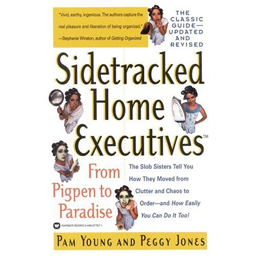
Back in 1977, Pam Young and Peggy Jones wrote their defining book on the new, incremental approach to keeping your house clean: Sidetracked Home Executives. In it, they advised women to set up a schedule for cleaning and other household tasks, and to spread out tasks that used to be included in spring cleaning over the months. They recommended keeping track of housekeeping jobs in a 3x5” cardfile, something I still do to this day (albeit intermittently). It was a good system, though, and helped a lot of women (and men) to get organized around the home. Peggy has retired, but Pam is still writing and inspiring from her website, Make it Fun and It Will Get Done.

Following up on Pam and Peggy’s no-spring-cleaning methods was the Flylady, known in real life as Marla Cilley. Marla also published her own book on the subject, Sink Reflections. The Flylady program has well over half a million followers worldwide, and features a free website with detailed instructions for achieving a clean and organized home. Many people sign up for free Flylady e-mail that puts reminders and task lists right in their inboxes. Pam Young is a regular participant in the website, too.

Well... to spring clean or not to spring clean? It’s still a little too early here in Delaware, where temperatures are dipping below freezing many nights and it’s too cold, yet, to open the windows. I mostly follow the Pam Young-Peggy Jones and Flylady recommendations for not doing too much all at one time. I think that’s particularly good advice for retirees, because we now have the time to do a little “deep cleaning” every day, and don’t have to set aside weekends or vacation time to get it done (been there, done that). Also, getting on ladders and scrubbing and moving furniture is hard work, and doing too much at one time can cause sore muscles and joints. I know my hands, particularly, get very sore if I do too much scrubbing.

But even though I’ll have to wait for a month or so till the weather warms up and I can open the windows while using strong cleaners, I’m already thinking about scrubbing tile, shampooing carpets, washing slipcovers, and hanging dusty blinds outside to wash them down.

Coming up: Is it worth your time to make homemade household cleaners?

Friday, March 20, 2015

Spring... Sort of

It will officially be spring later today and we here in the northeast are eagerly anticipating flowers and warmer weather, in place of the snow that is supposed to begin any minute. Snowdrops (pictured above) have been blooming here for a while now, and the generous sweep of daffodils beneath my kitchen window started sprouting while temperatures were still in single digits, with flower buds appearing this week. Cheerful, bright yellow forsythia can't be far behind.

At the same time that I pine a little for warmth and flowers, I realize that in a very short while, we'll all be complaining about the heat and looking forward to the cooler days of autumn and "sweater weather." In truth, it doesn't seem like we get all that much sweater weather here, but that we just alternate between coat-and-muffler weather and shorts-and-t-shirt weather, with but a few transitional "sweater days" in between.

The weather has been a "safe" and interesting conversation-starter for untold generations, hasn't it? For many of our ancestors, those who came from temperate climates, weather was a critical element in their lives. Most people farmed back a couple centuries ago, and changes in the weather, even just a particularly bad storm or long stretch of dry weather, could cause famine, disease, and death. It seems unimaginable now, doesn't it? Many of my students come from more tropical climates, and they don't seem to have our cultural habit of talking about the weather all the time. They mostly complain when it's very cold, something someone from Cuba, say, has a hard time getting used to.


During the most recent cold spell, I've been reading mystery novels set in the American southwest, enjoying descriptions of hot dry desert winds and people perspiring a lot. My reading so far has included Spider Woman's Daughter, by Anne Hillerman, and A Thief of Time, by her father, the late, great author dTony Hillerman. If you love the Colorado Plateau area of Arizona, Utah, New Mexico and Colorado, or think you might, or if you just like well-crafted mystery novels, I can recommend these. By the way, do read A A Thief of Time first, because Anne Hillerman's Spider Woman's Daughter  takes up the storyline, many years later, in A Thief of Time. I read them in reverse order because Anne Hillerman's book is the monthly selection for my detective story book group at the library. If you have access to Overdrive, which is the free e-book lending service many libraries provide for their patrons, both books are available there plus a lot more of Tony Hillerman's.

Reading really is a great way to "get away," isn't it? In the depth of the summer heat you can read stories set in the far north, and almost feel the icy chill. I can recommend Dana Stabenow's Kate Shugak mystery series, starting with A Cold Day for Murder. These are also well-written, entertaining mysteries set in an Alaskan national park. And the sense of place is as well done by
Stabenow for the Alaskan wilderness as it is by the Hillermans for the Four Corners area desert. Save Stabenow for deep summer, though. Almost as good as air conditioning.


Tuesday, March 17, 2015

Don't Buy It When You Need It

A lot of my purchasing is reactionary, which makes me pretty much like everybody else. I buy things because I've just discovered that I need them. The knob falls off a sink stopper. I'm out of toilet paper or milk. I need a dress for a special luncheon. I notice that my black dress shoes have gotten shabby. So I make a trip to the store or the shopping mall. Or I check my old faithful online stores. Maybe I look for the best prices available online, or check several stores at the mall to get the best price. But according to the best frugalist advice, this is NOT the best way to conserve your resources.

You shouldn't wait to buy things until your need is urgent. This is a concept I originally learned in Champagne Living on a Beer Budget, but Tightwad Gazette covers it, too. The concept is logical. The best deals on any item probably won't happen at the moment we discover we need it. Therefore, we should anticipate that need and keep an ongoing lookout for an excellent deal and purchase the item BEFORE we need it. That makes sense, but as usual, the trouble is in executing this good advice. This way of buying can save you quite a bit of money, but you have to use advance planning. You have to be... ORGANIZED.

I've been aware of this buying model for years, but didn't use it much in the past. I'd stock up on shampoo, maybe, and buy big bargain packages of paper towels and toilet paper, but that was about it. I was so busy working that I didn't have the time. Now I do, but I find that old habits die hard. I still buy most things when I need them, but I'm slowly doing better. After all, I am now retired and have a lot more time for planning and keeping an eye out for bargains.

Keeping lists is a help, but so is simply noticing, when you replenish the shampoo or soap, that there are only two bottles or bars left in the linen cabinet, and putting shampoo or soap on a list of things to scout for. Some things, like shampoo, aren't a problem for me. I like the inexpensive Suave or White Rain brands I can buy for about a dollar at Dollar Tree, so it's just a matter of scheduling a trip to that store sometime before I run out and have to grab more expensive shampoo somewhere else. Likewise, I haven't paid more than a dollar for toothpaste in years. When I do go to the dollar store, I check the toothpaste offerings, and if they have one brand or other at that price, I grab several tubes. Sometimes they don't, so I wait and don't buy. I try to keep several tubes on hand so that I don't end up paying more.

This seems kind of natural for things I buy all the time. But what about one-time purchases, or things I buy much less frequently. There are two keys here. First, try to anticipate your needs well in advance, at least a year if possible, and make a list. Second, if you have an urgent need to buy something right away, try to figure out how you can defer that purchase.

Anticipate Your Needs:  Even the most accomplished frugalist isn't going to be able to do this 100% of the time. But all of us can avoid being surprised by "emergency" needs a lot more often than we are. Just make note of things that you think might need replacing as you notice them. For example, my garden hose is on its last legs, so it's on my list to buy when I see a good special. You should especially do this with your wardrobe. Anticipate every possible type of event you may be called upon to attend and plan what you would wear, down to shoes and accessories. You should have something on hand for weddings, graduations, hking, formal events, "dressy" luncheons, funerals, a day at the beach, anything you remotely think might come up. Then start making lists and little by little, picking things up on sale, so that when one of these events arises unexpectedly you don't have to rush out and buy anything at full price.

This process is kind of an art as much as a science, but it will help you save really a lot of money. It also makes me feel so much more in-control and prepared. To jog my memory, I also sometimes check Consumer Report's list of what goes on sale each month. I know that I need a new pair of good walking shoes, for example, so by checking Consumer Report's list I see that I should probably wait until May, when athletic shoes typically go on sale. If I want to buy new dishes, June would be a good time. This doesn't mean you can't find excellent deals at other times, but retailers do have specific times of the year when they discount items they know a lot of people will be looking for.

If you think you need to buy it right now, especially at full price, find an alternative. This second key is more about discipline and creativity than planning. This concept, very foreign to me at the time, came from Champagne Living on a Beer Budget. The idea here is to just stop the reactionary "emergency" spending. This works on all scales. You have a lingering cough and are thinking about buying a pricey package of Vicks lozenges at the grocery? Buzz buzz buzz... your "reactionary buying" alarm should be going off. Is it really an emergency? You know you could get an equivalent store brand for half the price somewhere else. Also, you have a recipe for a soothing syrup you can make at home from all-natural ingredients you already have on hand. So... the smart money skips the Vicks, makes a batch of natural cough syrup, and puts generic cough lozenges on their discount store shopping list. Savings may be only a couple of dollars, but remember... these little savings add up in a big way.

You use the same concept with bigger items. Your dishwasher breaks down? You can rush over to Sears and buy one at full price. Or you can wash dishes by hand for a few weeks until you spot a good sale. You are invited to an evening wedding that requires semi-formal attire, and you have nothing to wear! A man can always rent formal wear, and rentals are available for women, too. But a women may be able to put something together from what is already in her closet. Every woman should have a long, black skirt in a silky fabric because you can add tops of every degree of formality to put together ensembles ranging from formal to casual.

Granted, there are plenty of times when you really do have to buy something for immediate use: gifts you didn't anticipate, clothes you find you really do need, a refrigerator that unexpectedly stops working and is not repairable, prescription medicine for unanticipated illnesses. There's no putting off some purchases. Even in these cases, however, it helps to have some idea of the most economical sources of such items, and often you can do some shopping around. You should know which pharmacy in your area tends to offer the best prices on prescriptions, where you can find interesting presents that impress but don't cost a fortune, consignment shops where you can buy gently used upscale clothes at a big discount.

I've started a new section in my household notebook to help me with my anticipated purchases. I've got a month-by-month listing of which things I buy and when they are usually marked down. I have a list of holidays and one of birthdays. A list of all the people I buy gifts for, with sizes and ideas for future gifts. A list of outfits (clothing, shoes, bags, and accessories) for reasonably foreseeable special occasions. And I keep shopping lists of things I think I'll be needing in the future, broken down by category. Household items, garden stuff, toiletries and personal care, clothing and accessories, and so on. I'm still working on this, but I think it's going to help me do better at avoiding  "emergency" buying hazards.
Thursday, March 12, 2015

Rethinking Amazon Prime

There are certain services that can be such a good deal, that can help make the most of a small income. I've found Amazon Prime to be such a service, for me anyway, but lately I'm having doubts. If you don't know what it is, Prime is a subscription service provided by Amazon.com. It is currently priced at $99 a year (comes to $8.25 per month). Prime members get a number of perks, including free 2-day shipping on all Amazon products, and some affiliated vendors also. You have free access to a large library of streaming video and music, and to a free "lending library" of Kindle-format e-books. You can also select 2 free books per month from a collection of four pre-publication fiction books published by Amazon (Kindle First).

For me, the biggest value was in the streaming video. In the several years I've been a Prime subscriber, I've watched a lot of great TV. But in the last year, many of my favorites have been removed from Prime. No more Midsomer Murders, Matlock, Cheers, As Time Goes By, the Closer, the Andy Griffith Show, and so many more! They do have all the Downton Abby, the Goodwife, and a bunch of the HBO stuff such as the Sopranos. But it seems like most of what they now have on Prime is either shows and movies I've never heard of, or things that appeal more to a younger audience. Lots of violence and raunch. not so much of the older, gentler TV programming I imagine lots of older folks tend to enjoy more than so much of the gory, disturbing newer programming. I looked recently and probably 2/3 of my watchlist had been removed from Prime.

Now. the 2-day shipping is a good deal in and of itself, but only if you do a lot of online ordering from Amazon. And you have to keep in mind that they offer free "whenever" shipping on orders over $25, so unless you need fast shipping all the time, you can probably get free shipping for most of your orders, anyway.

I've read a couple of excellent books from the Amazon First and the Kindle Lending Library, but lately the Amazon First selections have not seemed very interesting, and most of the Lending Library things are not really first-quality. Anyway, they are convenient but not really needed, because I can get a large number of books, audio books, and e-books from my local public library, and the library-affiliated Overdrive (electronic books, audiobooks, and streaming video) service... all totally free.

Amazon's music streaming service is easy to use, and there is a lot available, including some excellent playlists. But... have you tried Pandora, or one of the other free music apps? Or just the radio? There are occasional ads, of course, but I've found Pandora's content to be excellent and I love the way you can build your own custom "stations." And, again... it's free.

But for me, the real deal-breaker is the marked reduction in the quality of their Prime streaming video offerings. I prefer to watch TV on my tablet, because I have a small TV and my eyesight is bad. I can hold my tablet and see quite well. Comcast's tablet app now actually works... most of the time (I was shocked that they finally got it together, actually.) I can watch my new telenovela (La Sombra del Pasado, on Univision), and my new favorite comedy, Fresh off the Boat (ABC), plus my secret vice, General Hospital (also ABC) on my tablet, free of any charge beyond my Comcast monthly basic cable subscription. I'm more of a reader, but I could watch a lot more Comcast programming if I wanted, or get a $7.99 Netflix subscription and watch just about anything. Netflix has an immensely better library than Amazon Prime. You can also watch Hulu on a computer to see many of the recent TV shows... you need to pay for HuluPlus only if you want to watch on a tablet or have a bigger archive available. In addition, I'm gradually discovering how much older TV programming is available on Youtube. Last night, for example, I watched an episode from the final season of the Inspector Morse series on Youtube... free of charge.

My Amazon Prime subscription doesn't end until next January, unfortunately. So I guess I'll catch up on Downton Abby and Parks and Recreation. But unless things change, I won't be renewing. It just isn't a good deal for me any more. 

Monday, July 16, 2012

Progress in One Area Is Better than None


I AM making some progress lately, although still feeling rather... inert. It's funny that several of the blogs I read regularly seem to have the authors feeling a bit down in the dumps, too. Maybe it's the summer, this weather, which alternates between nice and absolutely beastly! We've got beastly coming up again starting tomorrow, with temperatures forecast at around 100, but they are predicting a shorter stay for the beast this time.

What I've been focusing on lately has been weight loss. My weight crept up too quickly from an athletic low some 8 years ago, and hit a high well over 200 pounds, and that's just way too much. Not only does it cause things to hurt, like knees, feet, and backs, but it's terrible for the health. Most troubling for me, being basically a shallow person, is that it is embarrassing... people just treat you so differently when you're fat. When you're fat and also old, well, you're pretty much invisible, aren't you? Plus... I love clothes, and it's just not fun to wear them when you're in plus sizes.

So, I've been trying out various schemes. I'm not totally happy with any, but... in the last few months I seem to have dropped 18 pounds! At first it was gradual, as I tried low-carb, all carb (i.e,a low-fat whole foods vegan diet), the old Weight Watchers selection plan, and calorie countng. Then I happened across a blog by the CEO of Weight Watchers International, David Kirchhoff, called Man Meets Scale . This guy is so darned funny, but more, he's a Weight Watchers life member, and has written a book about it that totally nails so many of the issues I have had with food, and difficulties I have had gaining control over eating. Anyway, I've read a lot of his blog and his blog-based book, Weight Loss Boss . Highly recommended.

Now, I haven't been to a Weight Watchers meeting in maybe 20 years, but I did lose quite a bit of weight back then, going to meetings, following the old selection plan program. I discovered that although it's not really expensive these days, about $40 a month, it's still beyond my tiny budget. But... diligent little web forager that I am, I found all the essential program elements, currently called PointsPlus, online. And though this isn't really fair to Weight Watchers, I started following them. I have alternated with counting calories, and I definitely - hands down - prefer the Weight Watchers system.

The Weight Watchers differences that really make it work for me so far are (1) the 49 Weekly Points you get each week, in addition to your Daily Points, (2) the addition of Activity Points, and (3) the designation of fresh non-starchy vegetables and fruits (but not juices) as Zero Point items. The Weekly Points allow you to cycle your calories or do a modest "refeed" once a week, if you want. (This, I've read, keeps your metabolism humming along a lot faster than if you just try for the same 1,500 or so calories each day.) The Activity Points reward you for exercising, but also allow you to eat a little more when you do exercise, thus not being "rewarded" by feeling like you're starving. The "free" fruits, especially, and also non-starchy vegetables, mean there's always something substantial to snack on, even if I've already budgeted all my points. Today, for example, I was feeling a bit "empty" in the afternoon, so in addition to my scheduled iced coffee with a half cup milk, I added a slice of watermelon. Perfect, and I'm good to go until dinner.

So anybody could easily just "roll their own" plan, using the Weight Watchers principles, which in my opinion are very, very smart. And which I am sure are backed by a zillion dollars worth of research. Easier to just go to meetings, but if you just can't afford it, there's still a way it seems.

Anyway, I'm feeling a lot happier and encouraged by this success in this one area of my life. Now... can I "weather" another heat wave?