Monday, April 6, 2015

Are Homemade Cleaners Worth Your While?

Back in the 1960’s, housewives read the Heloise column in the morning paper and learned to use hairspray to remove ballpoint pen ink stains from their husband’s shirts, and to use crumpled newspaper with a vinegar-water solution to clean windows. Did you know that, 50 years later, Heloise’s daughter still publishes magazine and newspaper columns, as well as maintaining a Heloise website? There are several books listed on Amazon, too. The latest is Handy Household Hints from Heloise: Hundreds of Great Ideas at Your Fingertips.

I learned a lot from Heloise - about easier ways to clean my home, how to do little things to save pennies here and there (and we know how these really do add up), doing laundry, recycling. She was out at the front of the movement that continues to this day... using nontoxic, everyday products like vinegar and baking soda to do much of your cleaning.

Today’s Sources of Cleaner Recipes

Today it’s not just Heloise. Amazon.com and the blogosphere are full of books and websites about natural, homemade cleaner recipes. Here are a few of the websites:
  • Rodale's recipes for 8 green cleaners that work. These include an all-purpose spray cleaner, a tile cleaner, an oven cleaner, window cleaner, lemon oil dusting liquid, air freshener, a gentle scouring cleaner, and laundry powder.
  • Apartment Therapy one-ups Rodale by providing 25 green cleaning recipes. The author claims that cleaners for almost every purpose can be made using various combinations of baking soda, white vinegar, hydrogen peroxide, borax, essential oils (such as tea tree oil, lavender oil, and eucalyptus oil), castile soap (such as Dr. Bronnerss), herbs and citrus peels, olive or other vegetable oil, and water.
  • HGTV’s article discusses ingredients used in green cleaning formulas and provides several recipes. Ingredients include white vinegar, baking soda, lemon, and rubbing alcohol. They also suggest adding a little ammonia to make strong cleaning solutions. Ammonia is often left out of “green” recipes because it is a strong alkali and therefore hazardous when undiluted. But it also provides strong grease-cutting power that may be needed at times, and is safe to use when handled properly (wear eye protection when mixing, for example, and NEVER combine ammonia with bleach (unless you want to damage your lungs with chlorine gas). 
  • Good Housekeeping Provides 9 recipes for homemade cleaners. These include the old “green” standbys of vinegar and baking soda, plus some non-natural ingredients such as ammonia, toothpaste, and dishwasher detergent. 

Is It Worth Your While to Make Your Own Cleaning Products?

There are good reasons for both making your own cleaners and for buying commercial products. So whether it's worth your while to make your own depends. It’s really a trade-off between convenience and effectiveness versus cost, environmental considerations and health. And how these balance out for you will probably vary from product to product.

Convenience

There’s no question that it’s faster and easier to pull a bottle of cleaner off the supermarket shelf and bring it home. When you make a batch of cleaner, you usually need to have multiple ingredients on hand, as well as containers to mix, store, and dispense your cleaner. Many homemade cleaner recipes just call for a few things you might already have on hand, such as baking soda or vinegar. For others, however, you may have to hunt around for things like lemon grass oil or other essential oils, or you may even have to order them online.

Effectiveness

Any of us who have purchased “green” cleaners have noticed that many don’t work as well as the “heavy duty” cleaners we used to buy. The same thing will be true for many homemade cleaners. That said, for many cleaning jobs you don’t need super powers. You can usually clean windows and mirror with just water and a towel. Adding a little something to the water is usually all you ever need. The same is true for kitchen counter sprays. Mothers with babies and young children may need a super-powerful laundry detergent. But empty-nesters like us may just need a basic detergent plus a bar of Fels Naptha soap for treating spots.

Cost

Most homemade cleaners will be cheaper than purchased cleaning products. There’s no way you’re going to find a bottle of window cleaner for sale that costs less than a cup or two of water, a little bit of vinegar, a drop of dish detergent, and a $1 spray bottle from the dollar store. Homemade may not always be cheaper, however, especially for some of the recipes that use more unusual (and costly) ingredients such as essential oils. There may also be commercial products sold at dollar stores that work as well, or almost as well, as the higher-priced brand name products sold at supermarkets. Some of these dollar store products may actually be cheaper than a homemade cleaner, especially when you include the cost of a container for storage or application.

Environmental and Health Concerns

Commercial cleaning products are made with a large number of chemicals, many of which are not good for the environment, your health, nor the health of your grandchildren and pets. And many or most are not specifically listed on the label.

The truth is, many of these may be causing allergies, sensitivities, and possibly even long term damage to our health we’re not aware of. And things that may not cause you a problem may be harmful to children or pets. For example, many people like to use pine oil cleaners for the fresh “natural” scent they leave behind. But vets recommend against using them around dogs, because they can cause liver damage. If they cause liver damage to dogs, what are they doing to OUR livers?

Homemade cleaning product recipes are now often touted as being “green.” Their ingredients are mostly non-toxic. Even potentially toxic ingredients like bleach and ammonia are quickly neutralized in the environment, when released in small amounts, and don’t cause any lasting harm. Making cleaning products at home from basic ingredients means you can know what is in your cleaner. There will be few, if any, undisclosed chemicals that you don’t understand. For people with allergies, liver damage, or other health problems, this factor may outweigh all the others.

Another environmental consideration is packaging. When you buy a bottle of liquid detergent, for example, its heavy plastic bottle goes into the recycling (hopefully) or the trash. You may feel OK about that if you recycle, but don't forget the additional environmental cost of manufacturing both the product and the packaging. Manufacturing in the US is far cleaner than it used to be, but it still requires a lot of energy, and inevitably results in some level of air and wastewater emissions.

This will also be true, remember, for the raw ingredients you use to make your homemade products. That vinegar and baking soda were manufactured, too, and someone had to produce the plastic or glass jug the vinegar came in, and the printed cardboard baking soda box.

Still, the biggest ingredient in many cleaners is water, and for many homemade cleaners you add only small amounts of other ingredients. Too, you’ll may use an existing container you’ve recycled for use in storing and applying your cleaner, and you’ll certainly reuse it when you need to make another batch. So from a packaging standpoint, homemade will usually come out ahead of purchased.

It’s Confusing... What Should I Do?

I know, it’s confusing for me, too.

Personally, I buy some cleaning products, and others I make. I really can’t see going to the trouble of making up one of those laundry soap recipes when a mid-sized bottle of laundry detergent lasts me for months. I’ve learned that we mostly use way too much detergent, and have cut way back on both that and softener.

In the bathroom, I prefer to use a scouring cleanser (like Comet) and commercial toilet cleaner for heavy cleaning, but I use homemade cleaning solutions for wiping down tile, tub, sinks and other surfaces. And of course vinegar, water, and crumbled newspaper are better than Windex for windows and mirrors.

I’d say just weigh your situation and needs, and the factors listed above, and make the best decision you can. But don’t make spreadsheets or spend hours at it. Use your knowledge and common sense. Remember that as an empty-nester, your need for cleaning products is probably a lot lower than when you had to clean up after a family. On the other hand, because things don’t usually get as dirty, you will likely have less need for really strong cleaners. Above all, your own priorities, such as health, finances, and available time, should be the deciding factors.


Friday, April 3, 2015

How Not to Be Seen as a Needy Old Person

Easter is this Sunday, and holidays are one of the hardest times for many older folks. Isolation and loneliness are hazards of getting older for some of us, and too often we find ourselves feeling even lonelier when our hopes for family contact and togetherness are dashed. If this happens to you, you're not alone. 

Disrespect of the Elderly

It sometimes surprises me how much less our society, nowadays, honors and values its elders, compared to generations past. I wrote about this in a Mother’s Day post a while back, titled Honor Thy Parents? Not so Much for Some. 

Then the other day I was reading some blog post comments and got a real eye-opener. Someone asked what she should "do about" an aging neighbor who had been making overtures of friendship. The writer, a young mother, said she already taking care of two elderly relatives and didn’t need another old person to take care of. Her first assumption, you see, was that if an older person wanted to be friends, there was an ulterior motive... the older person was obviously looking for younger neighbors to do things for her.

Some subsequent commenters disagreed and said they had older neighbors who were very independent and actually helped out their younger neighbors. But there were more than a few who agreed that old people just expect to have everyone do stuff for them, blah, blah, blah. and that the original poster would do herself a favor by just staying away. 

How Old People Are Viewed by the Younger Generation

These days, younger people are more and more seeing older folks as greedy, sucking up resources that should be theirs (like Social Security, despite the fact that we all paid into it for years and years). We oldsters are all supposedly expecting to be taken care of. I guess this is a reflection of increasing narcissism and looser family ties in our culture, but it is an attitude that exists, even in our own children sometimes, and we need to learn how to deal with it. 

The Importance of Not Seeming Needy

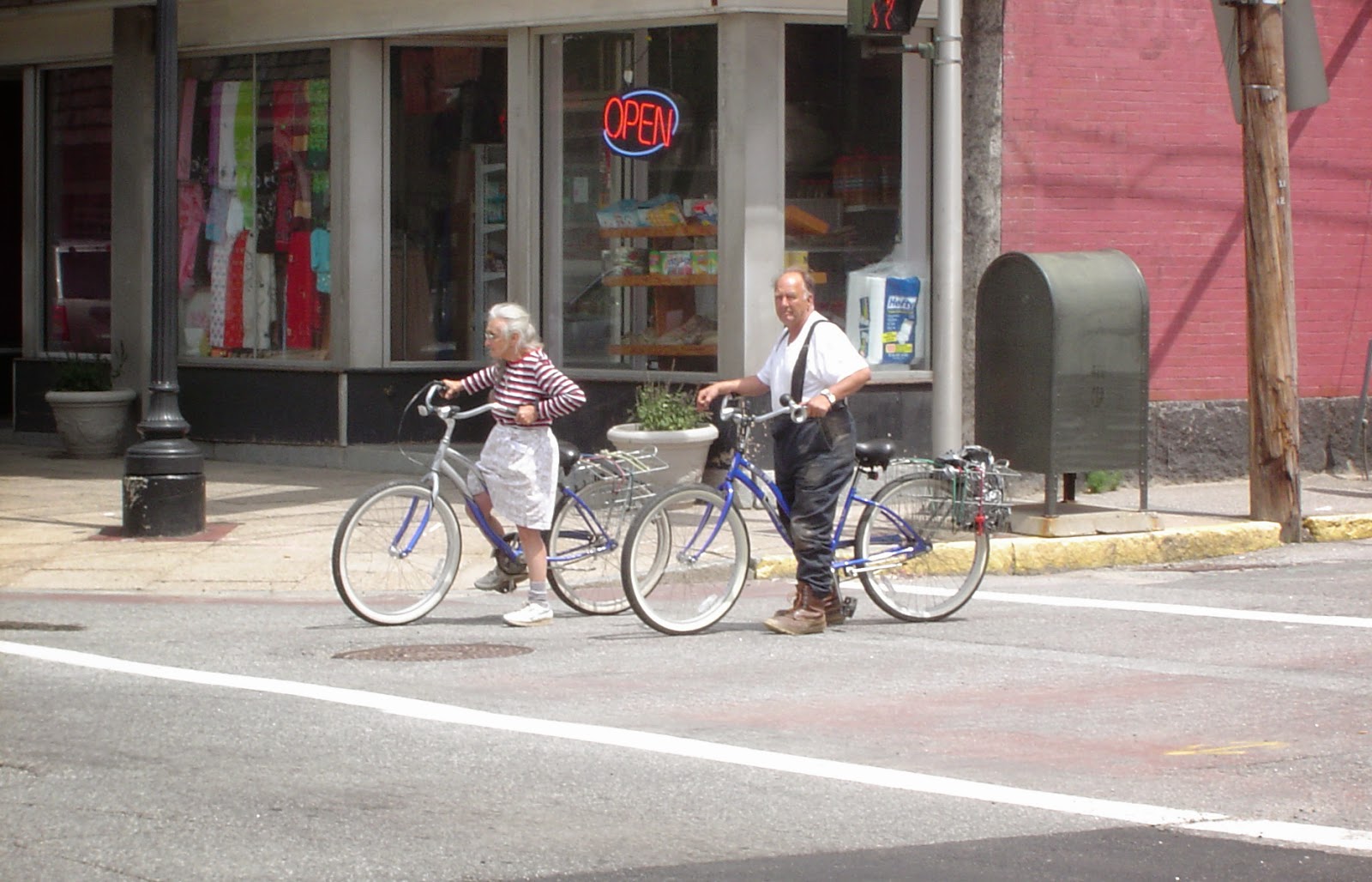
I more recently wrote, in Don't Be a Pathetic Old Person, that one of the most important tenets in successfully practicing Stealth Frugality is to not be pathetic. It’s partly for our own self-respect, but these days it’s also a form of self-protection. The more needy you seem to younger people, the more many of them will avoid you and disrespect you. We need social ties with people of all ages, including our families, so we need to be sure we’re not unthinkingly doing things that may alienate them.

The good news is that there are many things you can do to make you seem capable, self-sufficient, and abundant if not affluent. These will make family members, younger people, and even more affluent people your own age, feel more comfortable about differences between your situations. 

You're Reframing... Not Faking It

And there are undeniable differences. This is not about lying or covering up! You’re not trying to pretend to have more money than you actually do, or to be in perfect health when you have some serious problems. Maybe what I’ve heard called “reframing” is the best way to describe the new attitude you must learn to project. This requires a positive attitude, optimism, and a bit of faith. You have to learn to view your circumstances in a positive light. Although you aren’t ignoring the negative - and there’s always some of that - you focus on the good in everything.

In other words, you learn to behave and to talk about your situation and choices in a manner that does not make others feel uncomfortable or that they have to "do something" for you. When people, especially younger people, feel your very presence is a call for them to "do something" to help you, sadly, most of them will begin to avoid you like the proverbial plague. 

Some Ways to Seem Independent, not Needy

I am by no means a master at this, but I’m getting better every day. Here are some ideas: 
  • Don’t be asking for help all the time unless you really need it. It is true that a lot of old people are in the habit of asking others to do things for them that they could very well do for themselves. One of my students has an older neighbor who frequently asks my student to get things for her when she goes to the store. My student never complains, but I would get tired of it. Do your own shopping, or learn to order things online. Take care of yourself physically so that with luck, you’ll continue to be able to do your own shopping, shovel snow from your sidewalks and mow your lawn. Learn how to do small household repairs, or hire a handyman. Don’t feed into the stereotype of older people always asking others for help. Save your requests for when you really need it.
  • Instead, do things for others. Try to be generous to everyone, even in little ways. Make a list of birthdays, get a bunch of cards at the dollar store, and send everyone cards for their birthdays. Pick up and put away your neighbor’s trash cans when they blow into the street. Give small gifts as often as possible and to as many people as possible, even if it’s just a clipping from the newspaper about something they’re interested in, a loaf of home baked bread or some cookies, vegetables from your garden, or a small, inexpensive item from your gift stash. Offer to take in mail and water plants when neighbors go on vacation, or to babysit if they have young children.
  • Never say, "I can't afford that." And that's actually true much of the time, by the way. Everything we do involving money is a function of our personal choices, of how we prioritize our needs against what we have available to pay for them. There's very little I couldn't afford, at least briefly, but I just don't want to make the sacrifices that would be needed for a lot of things. I could afford a month-long trip to Europe, for example. Many of us could even if we had to clean out our bank account, max out our credit cards, mortgage our home, sell our stuff, or take out a big loan. But we rarely want to do those things, so we make more modest travel plans. 
  • Express happiness and gratitude at all you do have. When you appreciate what's good in your situation and possessions, it is very appealing to others. And there are always good things in every situation. You can't afford a big, fancy house? Then you learn to appreciate the convenience and reduced upkeep of a small home or apartment. A friend had to move into a small studio apartment, and although she had to give away many of her things, she hasn’t complained but instead enthuses over her gorgeous view, the laundry facilities right on her own floor, and the proximity to shopping. I had to stop driving because of my eyesight, but I tell everyone how good it is that I have a reason to walk a lot, and how convenient it is to take the bus and not to have to deal with car upkeep. This needs to be true, joyful appreciation, by the way, not the grudging kind.
  • Give people valid reasons, other than cost, why you cannot or are not going to do or buy something. Or say nothing at all. I don't go out to eat a lot at restaurants, for example, because restaurant food is just not that healthy. It's also far less expensive to eat at home, but I don't need to say that. 
  • It’s ok to say you like... or love... things you’re not going to buy. Going shopping with a friend at an upscale department store can be fun. It’s fine to admire all the gorgeous things you see (and can’t afford). Just don't express a sad longing for them... that’s a little pathetic. I view upscale “window shopping” like a trip to a museum. You can enjoy without buying. Plus, knowing what good quality merchandise looks like helps you make better choices at discount stores and flea markets, doesn’t it? Sometimes a friend will urge you to buy something you have said you really like. Just say you need to think about it. Personally, I’ve found that when I make impulsive purchases they often turn out not to be what I really need. So I usually just say I have made it a policy to think about things a bit before I buy them, so that I don’t end up with closets crammed with stuff I don’t use. It gets you off the hook, but it’s actually a good habit to form.
  • Use environmental concerns as a rationale for frugalities. Not using a car, keeping your thermostat low in the winter and not using air conditioning? Not using a dishwasher and drying clothes on a clothesline? These are all genuinely good for the environment because they cut back on energy use. They save you money too, but you don’t need to say that.
  • State a decided preference for things that are within your budget. You can give a reason, or not. I tell people I do a lot of shopping at a small discount market in my neighborhood. True, the prices are great and it really keeps my food budget in line. But mostly I explain it by the convenience. And it is super convenient to just dash over there on foot, rather than waiting for a bus and traveling much farther to a big supermarket. I also subscribe only to the Basic cable lineup and so don’t get most of the cable channels my friends and family do. I tell people have the basic only so that my grandchildren have something to watch when they come over. I mostly read, and the few TV programs I watch are via streaming video - Amazon Prime or Netflix. I don’t want to pay the $100 or so many people shell out for their cable packages, but I don’t need to mention that. 

Make This a Gift to Yourself

Notice that nothing I say to explain my choices, if necessary, is untrue. You don’t have to be a liar to do this reframing. Just focus on the positive. Appreciate the heck out of all you do have. Be as frugal as you need to, but do it in a way that is “stealthy,” rather than talking about it to everyone. Doing this will make you feel more abundant. That in turn will not only make you feel happy, but it will also help you be more generous with others And doing all this, my friend, will keep YOU from becoming one of those pathetic, needy old people that others avoid.

Wednesday, April 1, 2015

Start a Stash for Frugal Impromptu Gifting

Giving gifts has definitely gotten harder as I’ve gotten older. It takes more thought to find nice things that I can afford. But even getting out to comb the malls for something suitable, not to mention the perfect wrapping and card, has gotten more difficult, especially since I stopped driving. But even in “reduced circumstances,” we all want to do what it takes to give presents to our friends and family that they like and appreciate.

And there are so many possible occasions for gift giving!  Sometimes they come up unexpectedly. But you can be prepared for these times. Say you’re invited to dinner at a friend’s, and you want to bring a hostess gift. Or you learn that one of your new friends at your book group is having a birthday and you want to give her something. Or your neighbors invite you to come over for cake and ice cream to celebrate their little boy’s birthday. No problem... just go to your “Gift Stash.” Few things you do to plan ahead will save you more money, time, and aggravation.

It was maybe 30 years ago that I learned how to do this, and it was quite the revelation. I was visiting my friend Connie and her boyfriend, and I’d just announced some kind of happy milestone event. I don’t even remember any more what it was! What I do remember is that after congratulating me, Connie ducked into the hallway, returned just a minute later with a prettily-wrapped gift, and presented it to me. It was a beautiful hand-bound journal, covered in printed raw silk and with handmade paper pages.

Now, this was not an expensive book. Maybe less than $10 at an import store. But it was just beautiful, and I loved it. Moreover, I was surprised and impressed that they had a gift on hand for me, just in case a celebration-worthy event should occur. Some weeks later, her boyfriend Matt explained that when they were out and about, shopping or on vacation, whenever they saw things that would make nice gifts, they bought them, wrapped and tagged them, and kept them in a box in the closet. They didn’t buy for specific people, but just bought attractive or useful things that they thought likely to be admired by most people. Some were more for women than men, and vice-versa, and they also had things for boys and girls. They didn’t say it, but I later learned that they often bought things on sale, or at prices they thought were particularly attractive. We were all pretty much living on a shoestring back in those days.

I always loved this idea, but followed up on it for myself only recently. I have started a Gift Stash with a deep box in my office closet where I put the things I find. I wrap them in nice paper and curling ribbon - I have a thing for curling ribbon - and attach a little tag that says what the gift is. I really should have a written inventory... soon, maybe.

These days, when I don’t drive and getting to the mall can be a big time drain, I’ve pulled things out of my Gift Stash for a number of occasions. Birthdays, celebrations, hostess gifts... anything where I need something, but it doesn’t need to be very expensive. When my children or grandchildren have birthdays or at the holidays, I always shop specifically for them - not from my Gift Stash. But for other occasions, it has really come in handy. And because the things I buy for the Stash are usually marked down, I save a lot of money and can afford to give nicer little presents more often. And everybody loves getting a gift.

So... what kinds of things do I put in my Gift Stash? All kinds of things. Here are some ideas to get you started:
  • Boxed stationery and notes, often from TJ Maxx or Marshall’s. This is a staple, something everyone can use.
  • Pretty earrings, bracelets, and pins, some from craft fairs I visit.
  • Scented soaps, lotions, and liquid hand soaps. Who can't use these?
  • Scarves. Last year my daughter bought me a beautiful paisley scarf from India at a local import shop, priced at about $40. Not long after, I found an almost identical one, at the AC Moore craft store, for $4.99 at half price. So I bought a few. They are lovely, look like they cost a lot more money, and make nice gifts.
  • Gadgety kinds of small electronics and tools, but only reasonably good-quality ones. I’ve gotten these on sale at all kinds of places, including hardware stores, the men’s department at department stores (usually after the holidays), and technology stores. These are for the guys.
  • Hardware stores often have all kinds of interesting, small items that make good gifts. Smaller local stores tend to have better findings than the big-box stores, though. I've gotten the cutest small flashlights, keyholders, and kid's toys at my local Ace Hardware store.
  • Ornamental boxes, small plates, and vases from import and overstock stores. I try to avoid obvious tschotskes, but small ornamental containers of all kinds can be very useful and make nice gifts.
  • Books that have been marked down severely can be found at bookstores, of course. Barnes & Noble has always had great bargain book shelves. But I’ve found some really nice things at other types of stores, notably TJ Maxx. I’ve even found some excellent books at the dollar store. Coffee table-type books, with lots of pictures, seem to be on sale quite often.
  • Wine is a great gift. I don’t buy a lot of wine, but the owner at my local liquor store is interested in wines, and even though they don’t have a huge inventory, he can always point out something good at a good price. When I buy something I like, I try to remember to go back to get a few more bottles for the Stash. Wine makes a great hostess gift, of course.
  • Dollar stores often have really cute things for kids. Some of it is a little junky, but they seem to enjoy them anyway. And no kid is likely to hate a coloring or activity book plus a pack of washable colored pens, or a yoyo, or some of the amusing little games they sell.
  • Handmade items - made by you! - are fantastic gifts, and usually quite frugal. Whatever your hobbies are, you can probably use them to make small gifts. I’m a knitter, and I can use small amounts of leftover yarn to make all kinds of gifts - scarves, mittens, hats, dishcloths, and so on. Crocheters can do the same... I was recently gifted with a really nice crocheted market bag and a beautiful crocheted flower with a long stem to be used as a bookmark. Woodworkers, painters, soap makers, gardeners (think potpourri)... all can make wonderful, unique small gifts.
  • Candles can often be found marked down at gift shops, import stores, and overstock stores. They make nice, small gifts.
  • Luxury candies and snacks are good additions to the Stash Box. Be careful of chocolate, though, as it tends to “flower” when not fresh, and while that doesn’t affect it’s flavor, the white film is unattractive and reveals that the candy is not fresh. I’ve gotten delicious gourmet specialty food items at overstock stores like Marshall’s and TJ Maxx. For example, I used to find some specialty Texas salsas, in colorful jars, that were absolutely delicious and perfect for gifting. If you’re unsure, try one yourself, and if it’s good, go back and buy more for your Gift Stash.

The possibilities for impromptu small gifts are endless. Your imagination will likely supply many more ideas.

The key is to keep an eye out for gifts to stash wherever you’re shopping. Being able to provide a thoughtful, well-received gift at a moment’s notice has definitely made my life easier and more abundant.

Monday, March 30, 2015

Is It Time for Spring Cleaning?

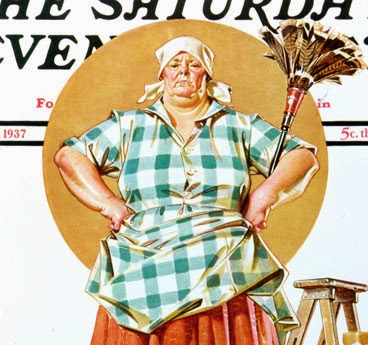
I’ve never been one of those who enjoys cleaning my home and keeping it organized. And yet, I’ve found over the years that I function better and am happier when my living and working environments are neat, tidy, and clean. Now that I am retired, you’d think it would have become simpler to maintain order here at home... but it has not! It’s by no means the proverbial pigsty my mother used to occasionally compare my messy childhood room to, but it’s typically not as organized and company-ready as I’d like. From as far back as I can remember, spring has been the traditional time to do a really thorough housecleaning.

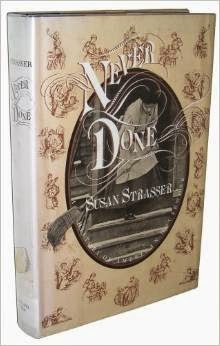
My local newspaper recently featured information from a book about the history of house cleaning, Never Done: a History of American Housework, by Susan Strasser, a local professor emeritus of history. (She has written some books that sound fascinating, by the way, including a history of trash!) Then, as now, where winter weather is cold, people keep their windows tightly shut to conserve warmth. But when coal and wood were used to heat homes, and kerosene and candles were used for lighting, a lot of dirt accumulated during the cold season. It wasn’t just dust - oily soot had to be removed from surfaces, and that was hard work. Spring cleaning was an absolute necessity back then. According to Strasser, women would typically set aside a full week, and work daily, from dawn to dark, on their spring cleaning.

There were no vacuum cleaners back then. No rug shampooers, Swiffers, or even washing machines. Before water was piped into homes, the water for cleaning often had to be fetched in buckets from the nearest hydrant, well, or creek, and then heated on the stove. After use, dirty water had to be carried back outside and dumped. Rugs and upholstered furniture were hauled outside to be cleaned. Rugs were hung and beaten with paddles, and upholstered furniture was wiped down and/or brushed thoroughly. Every interior surface, including walls, floors, windows, cabinets, and furniture, was scrubbed during that week.

There was no Mr. Clean, either, so women usually had to make the soap they used for cleaning. Sand and salt were sometimes used for scouring, and vinegar provided yet another cleaning aid. So time consuming was this cleaning that families had to make do with cold dinners, because women didn’t have time to cook when spring cleaning was going on.

Nowadays, even those of us who perform a spring cleaning ritual can have a hot dinner. We are indeed very fortunate to live in an era where so much less indoor grime is caused by heating and lighting, and cleaning is so much easier. In fact, many Americans no longer do spring cleaning at all, but rather do the “deep cleaning” incrementally, from month to month, or as the need arises.

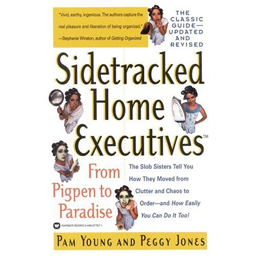
Back in 1977, Pam Young and Peggy Jones wrote their defining book on the new, incremental approach to keeping your house clean: Sidetracked Home Executives. In it, they advised women to set up a schedule for cleaning and other household tasks, and to spread out tasks that used to be included in spring cleaning over the months. They recommended keeping track of housekeeping jobs in a 3x5” cardfile, something I still do to this day (albeit intermittently). It was a good system, though, and helped a lot of women (and men) to get organized around the home. Peggy has retired, but Pam is still writing and inspiring from her website, Make it Fun and It Will Get Done.

Following up on Pam and Peggy’s no-spring-cleaning methods was the Flylady, known in real life as Marla Cilley. Marla also published her own book on the subject, Sink Reflections. The Flylady program has well over half a million followers worldwide, and features a free website with detailed instructions for achieving a clean and organized home. Many people sign up for free Flylady e-mail that puts reminders and task lists right in their inboxes. Pam Young is a regular participant in the website, too.

Well... to spring clean or not to spring clean? It’s still a little too early here in Delaware, where temperatures are dipping below freezing many nights and it’s too cold, yet, to open the windows. I mostly follow the Pam Young-Peggy Jones and Flylady recommendations for not doing too much all at one time. I think that’s particularly good advice for retirees, because we now have the time to do a little “deep cleaning” every day, and don’t have to set aside weekends or vacation time to get it done (been there, done that). Also, getting on ladders and scrubbing and moving furniture is hard work, and doing too much at one time can cause sore muscles and joints. I know my hands, particularly, get very sore if I do too much scrubbing.

But even though I’ll have to wait for a month or so till the weather warms up and I can open the windows while using strong cleaners, I’m already thinking about scrubbing tile, shampooing carpets, washing slipcovers, and hanging dusty blinds outside to wash them down.

Coming up: Is it worth your time to make homemade household cleaners?

Friday, March 27, 2015

You Can Still Get Free Tax Help

Volunteers have taken over the big meeting room at the library where I teach and do volunteer tutoring, and there has been a steady stream of people flowing in to have their taxes done, sometimes with shoeboxes or bags of receipts in hand. Like every year, they'll be coming in right up until April 15. Yes, the US tax filing deadline is looming - not much more than two weeks away!

One nice thing about being retired on a small income is that you may not even need to file a return! There’s always a silver lining. But if you need help doing your taxes, assistance is going to be a little harder to find this year, especially from the government.

The IRS has traditionally offered assistance through both walk-in centers and phone assistance. But according to recent news stories, such as this one in the Washington Post, the number of taxpayers having trouble getting through to an IRS agent for assistance over the phone has been at an all-time high this year. And the IRS has warned that the availability of in-person assistance at local Tax Assistance Centers will be very limited. As reported in Forbes, the IRS is attempting to establish an appointment system at some centers, but they are blaming budget cuts plus a large burden of new work related to the Affordable Care Act for their inability to provide much tax assistance this year.

Fortunately, there are a number of other sources of free tax assistance available to those with lower incomes (usually under $53,000) and relatively uncomplicated tax situations. And it's not too late to get help!

The IRS’s website provides links to Volunteer Income Tax Assistance (VITA) and Tax Counseling for the Elderly (TCE) program locations around the country.
These centers are staffed by IRS-certified volunteers.

The AARP Foundation also provides volunteer-staffed programs for free tax filing assistance, for all ages, at centers around the country. You can find out more about the program and locations at the AARP Foundation Tax Aide program website.

In addition, there are other non-profit organizations that work at libraries and other community centers to help qualifying taxpayers prepare and electronically file their returns. In my area, the libraries will give you a list of tax preparation programs with locations, days and hours, and phone numbers to get information and make appointments. Some centers do offer appointments, while others operate on a walk-in basis. Since I tutor and teach at the library several times a week, I’ve seen floods of people come in to have their taxes done by one of several groups, and I’ve never heard anyone complain about the help they got. If you want to find free local tax filing that may not be included on the IRS lists, I’d start by calling your local library and senior center.

You can prepare your own tax returns using free online software that will electronically file your return. I’ve always done my own taxes and have found that the commercial online electronic services have gotten better and better over the years. My only complaint has been that the online no-cost filing forms sometimes aggressively try to steer you to choose options that you have to pay for, and that can get very annoying! However, they are easy to use, do a good job, do all the work of filing for you, and seem to be pretty reliable in terms of sorting out deductions and stuff like that. Plus, you don’t have to keep checking and rechecking your math to avoid errors. Here are the three top free commercial services that received top user votes in a survey published by Lifehacker.com. Keep in mind that although these providers offer free basic preparation and e-filing, they will charge you for additional services, including state taxes and other add-ons. And as I found, they can be pretty aggressive and even tricky in trying to convince you that you need and should pay for those extras.
  • Turbotax was the most popular free tax return preparation tool in Lifehacker’s survey.
However you do it, be sure to file your return by the deadline. Because paying penalties isn't frugal.